
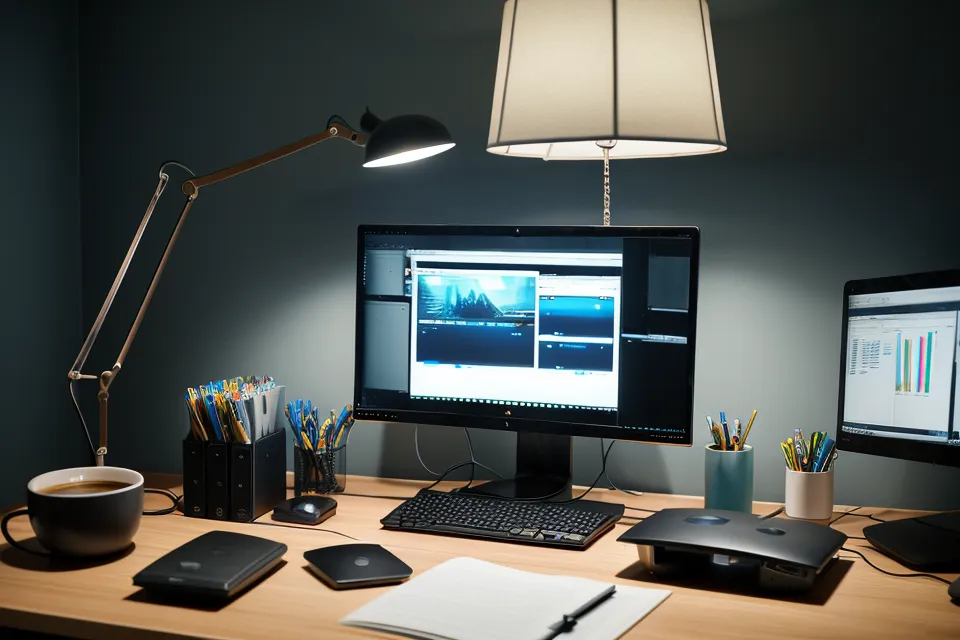
Mid-afternoon hit right in the middle of a messy React state refactor, and my three monitors turned into a blinding smear of glowing code. My temples throbbed in that dull, familiar rhythm right behind my eyebrows, signaling that my focus was officially fried for the rest of the workday.
Before diving into the stack that helped me handle these marathons, a quick heads-up: I earn a commission if you purchase through the links on this page, at no extra cost to you. I only recommend eye supplements that I have personally bought, tested, and tracked at my own desk across months of remote client work. Also, full disclaimer: I am a software developer, not an optometrist or any variety of medical professional. Talk to your own eye doctor before overhauling your daily routine.
The Triple-Monitor Meltdown and the Eye Drop Trap
Living in Austin and working fully remote for three years completely wrecked my tolerance for screen glare. When the daily afternoon headaches started showing up like clockwork, my optometrist delivered the standard diagnosis: digital eye strain. Her initial advice was the classic 20-20-20 rule standard—look at something 20 feet away for 20 seconds every 20 minutes. It sounds easy on paper, but if you have ever been neck-deep in a complex asynchronous call stack, you know that interrupting your mental flow state every twenty minutes is practically impossible.
I tried solving the problem with hardware first. I bought specialized blue-light-blocking lenses and tweaked my terminal color themes, but the physical discomfort persisted. That was when I fell into my first major mistake: I wasted two months blasting lubricating drops into my eyes hourly, only causing rebound irritation while completely ignoring the internal inflammation building up from hours of relentless glare. My eyes ended up feeling drier than when I started, especially when I toggled between high-contrast workspaces.
There is a specific, gritty sand-behind-the-lenses feeling when switching focus from dark-mode terminal windows to bright browser devtools. That harsh luminance jump exposes just how exhausted your ciliary muscles and ocular surface really are. Hardware tweaks like How to Use Dark Mode and Supplements for Better Screen Comfort can soften the blow, but eventually, I realized my screen-time tax needed an internal fix rather than another topical band-aid.
Deconstructing VisiFlora: Macular Pigment Meets the Microbiome
When I started digging into nutritional formulations in late winter, most traditional vision stacks looked identical. They were almost universally built around the landmark AREDS2 trial lutein to zeaxanthin benchmark ratio of a 5:1 ratio (10 mg lutein to 2 mg zeaxanthin). That ratio is solid science for fortifying the macular pigment, which acts as internal sunglasses against high-energy shortwave light. But when I stumbled onto VisiFlora, the angle was distinctly different: it paired traditional ocular carotenoids with compounds designed for gut flora support.
I remember sitting at my desk, staring at the ingredient panel wondering whether the gut-retina axis was legit science or clever marketing fluff. As someone who spends his working hours debugging distributed systems, the concept of a secondary biological pathway made logical sense. In software architecture, an interface error often stems from an unhandled database bottleneck downstream. In the human body, the gut microbiome regulates systemic inflammation and nutrient absorption, which directly influences how efficiently fat-soluble carotenoids reach ocular tissue.
The formula simplifies user friction by utilizing the manufacturer recommended daily serving of 1 capsule daily. After testing clunky, multi-tablet regimens that felt like managing conflicting npm dependencies, having a single capsule to take with lunch made adherence effortless. Because supplement pricing changes based on supply runs and package bundles, you will want to check the vendor's page directly to see their current pricing.
The Circadian Inversion: Why Timing Matters for Night-Shift Coders
Most supplement advice suffers from a massive architectural flaw: it assumes everyone works an identical 9-to-5 schedule in natural daylight. But a substantial portion of developers—myself included during crunch weeks, alongside dedicated night-shift maintenance engineers—operate on completely inverted circadian clocks. When you work from late afternoon until early morning, your biological inputs are fundamentally scrambled.
Circadian disruption changes gastric emptying rates, digestive enzyme output, and systemic lipid metabolism. Carotenoids like lutein and zeaxanthin are strictly fat-soluble. If a nocturnal coder pops an eye supplement at noon on an empty stomach just because a blog post said to take it in the morning, absorption plunges. The bio-availability degrades, leaving your retinas vulnerable right when your triple-display rig is burning at full blast in a pitch-black room.
For inverted schedules, nutrient timing must match your personal metabolic cycle. I learned to synchronize my dose with my primary heavy meal—the meal with sufficient dietary fats to act as the transport carrier—regardless of what the clock on the wall says. Pairing proper carotenoid timing with systemic circulation strategies, similar to what I explored in Comparing Lutein and Zeaxanthin Supplements for Triple Monitor Users, makes a noticeable difference in how your eyes handle cumulative photon exposure across unconventional shifts.
Field Testing: From Late Winter to a Late Spring Launch
I incorporated VisiFlora into my stack starting in late winter. During the first two weeks, my tracking sheets looked pretty flat. Supplementing carotenoids and flora supports is not like chugging an espresso shot; it is more like slowly rewriting technical debt in a legacy codebase. You do not notice the benefits overnight, but rather by the absence of recurring crashes.
After about three weeks, the afternoon transition began to feel less abrasive. The real test arrived on one Tuesday afternoon in late spring. We were deploying a high-stakes client database rollout that involved several hours of live queries, tailing server logs, and hopping between frantic Slack channels across all three of my screens. Usually, an afternoon that intense guaranteed a piercing migraine and painful, bloodshot eyes by dinner.
Right in the thick of the rollout, I had an unexpected realization: my involuntary forehead squint had eased up during a tense database rollout without needing midday ibuprofen. My brow was relaxed, and the sandpaper sensation behind my eyelids simply hadn't triggered. That physical check-in was the clearest signal yet that the internal defense buffer was doing its job.
Practical Realities: What a Single Capsule Can and Cannot Do
By around early autumn, I had logged enough screen hours to separate reality from hype. VisiFlora proved to be a remarkably consistent tool in my setup. The biggest advantage is that its dual-action focus bridges ocular nutrition with digestive efficiency, supported by a reassuring 60-day money-back guarantee. The one-capsule dose is refreshingly low-maintenance compared to bloated four-pill packs.
However, it has its constraints. It sits at a premium investment tier compared to bare-bones grocery store vitamins, and you can only order it through their official website rather than grabbing it on a quick retail run. If your budget is tight or you prefer a straightforward botanical approach without the microbiome angle, options like TheyaVue exist as alternative considerations, which I analyzed in my breakdown of VisiFlora, iGenics, and TheyaVue.
Most importantly, no supplement can completely override reckless working habits. If you refuse to adjust monitor brightness, ignore workspace ergonomics, or code for sixteen hours straight without blinking, your eyes will eventually pay the price. But if you treat your visual health like critical system infrastructure—giving it the right nutritional inputs while scheduling tactical breaks—tackling intense debugging marathons becomes substantially more sustainable.