
Seven Supplements, Fourteen Months of Eye Fatigue Testing
Seven. That's how many different eye supplements I cycled through during this fourteen-month stretch of testing, and only two of them earned a lasting spot in my routine. Three years into remote work, my afternoon eye fatigue had gotten bad enough that my optometrist used the term digital eye strain, a fancier way of saying I'd been running my hardware past spec, which, for a guy who voluntarily stares at three monitors for a living, felt a little on the nose.
Quick disclosure before the comparison starts: this site runs on affiliate links, and if you buy through one I earn a small commission at no extra cost to you. I'm not a doctor or an optometrist, just a developer who tracked his own patterns for over a year and is sharing what actually held up under his own testing. Check with your own eye doctor before changing anything based on a stranger's spreadsheet.
Does Blocking Blue Light Actually Fix Anything?
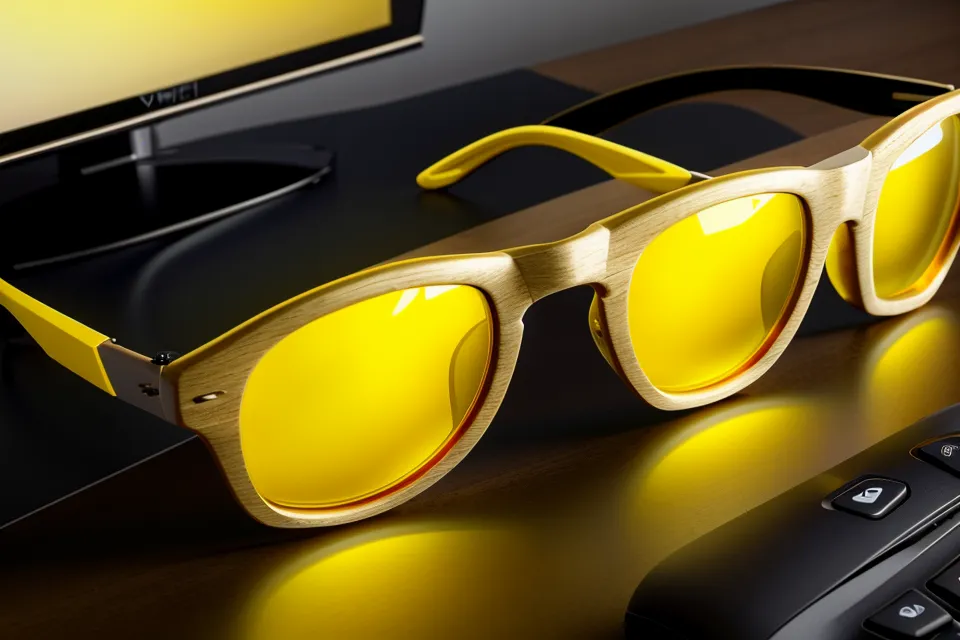
My first move, like most developers chasing a bug, was to throw hardware at the problem — I went down the blue light glasses rabbit hole and ended up buying a pair of high-end yellow-tinted "gaming" glasses that cost about a week's grocery budget. They took the edge off the glare, sure, but they never touched the dull throb behind my brow that showed up by mid-afternoon and made me want to lie down in a dark closet. Classic case of patching the symptom instead of debugging the actual root cause.
Pro esports players deal with something close to this, just at a different intensity: hours of sustained near-focus with no real break, which is where the standard twenty-twenty-twenty advice (look at something twenty feet away for twenty seconds every twenty minutes) starts to fall apart. I read a comparison once between eSports players' screen demands and a long coding session, and the parallel tracks: for short bursts of email-checking, the rule is fine. For ten-plus hours of sustained focus, it's like bailing a sinking boat with a teaspoon.
Somewhere in that same stretch I also tried pressing a cold, damp cloth over my eyes during lunch breaks, on the theory that cooling things down would reset whatever was inflamed. It felt pleasant for about four minutes and did nothing measurable by the time I was back at the keyboard. The only break that actually helped was a real one: walking a stretch of the Barton Creek Greenbelt trailhead away from every screen I own, which did more for the ache than any gadget, even if it wasn't something I could do between client calls.
Lutein and Zeaxanthin Kept Showing Up, So I Paid Attention
Once I started reading ingredient labels instead of marketing copy, two names kept showing up everywhere: Lutein and Zeaxanthin. I'm not going to pretend I understand the underlying biology — I just noticed the overlap and started cross-referencing which bottles actually listed real milligram amounts instead of hiding behind a vague "proprietary blend." That filter alone knocked out more than half of what I tried.
I've actually written up the slower, more frustrating middle stretch of this test elsewhere, if you want the blow-by-blow: Beyond the Blue Light Filter: My Fourteen-Month Quest for the Right Eye Stack covers the early misses in more detail, and Staring at Three Monitors in Austin: What I Learned Testing Eye Supplements After the Blue Light Glasses Failed has the specific tracking data from that period. This piece is really about the two approaches that actually made it to the end of the comparison.
VisiFlora's Gut-Eye Bet vs. iGenics' Ingredient Stack
VisiFlora is where this comparison gets interesting, because it skips the "more ingredients" approach entirely. VisiFlora bets on something else — a connection between gut health and how well your body uses nutrients at all, which is a different kind of claim than anything else on these labels. I can't verify the biology from a spreadsheet, but it was different enough from the ingredient-stacking approach that I wanted to test it properly.
The clearest signal that something had actually shifted showed up during an end-of-day code review: I read through the entire diff without once losing my place or doubling back to find where my eyes had drifted off a line. That's not a controlled study, it's just the kind of thing you notice once it stops happening regularly. What I liked about VisiFlora beyond that result was the simplicity — one capsule a day, compared to some of the three-pill regimens I'd tried earlier in this test, plus a 60-day money-back guarantee that made trying it a lower-stakes bet.
On the other side of the ledger sits iGenics, which takes the more conventional route: twelve specific vision-supporting ingredients, a well-known name in the category, and decent feedback from other developers I've talked to online. My main gripe was the runway: it felt like it took noticeably longer to register any change in evening fatigue compared to the gut-focused option, even though plenty of people get real results from it as a reputable, if slower, pick.

Where TheyaVue Fits For Budget-Conscious Testers
TheyaVue is the budget option in this comparison, and it earns that label honestly, a sprawling twenty-four-ingredient formula that reads like a shotgun approach, priced low enough to make trying supplements at all feel low-risk. It helped with general glare, but it never had the recovery power my triple-monitor setup actually needed day after day. A friend of mine, who plays drums in a local cover band and has zero patience for anything that smells like snake oil, once asked me point-blank if any of this was just placebo. Fair question. I don't have a lab to settle it, only a spreadsheet and a pattern that held up for well over a year.
Choosing Between the Two Approaches
If I'm being direct about it: choose the ingredient-stack approach — iGenics or TheyaVue — when you want a known, broad-spectrum formula and you're fine waiting longer to notice a difference, especially if budget is the deciding factor. Choose the gut-focused approach, VisiFlora specifically, when you've already tried a stacked-ingredient product without much payoff and you want something simpler to stick with daily.
By the time the sky outside goes fully dark, the only light in my office is the blue-white spill off three monitors climbing the wall behind the desk, and these days that scene doesn't end in a headache the way it used to. If you're weighing the same decision I was, VisiFlora is the one I'd point you to first, mostly because it's the one still sitting on my desk, long after everything else got cycled out.
Whatever you land on, track it. A vague sense that your eyes feel better is a lot less convincing than a few months of notes on exactly when the afternoon fog actually lifts.