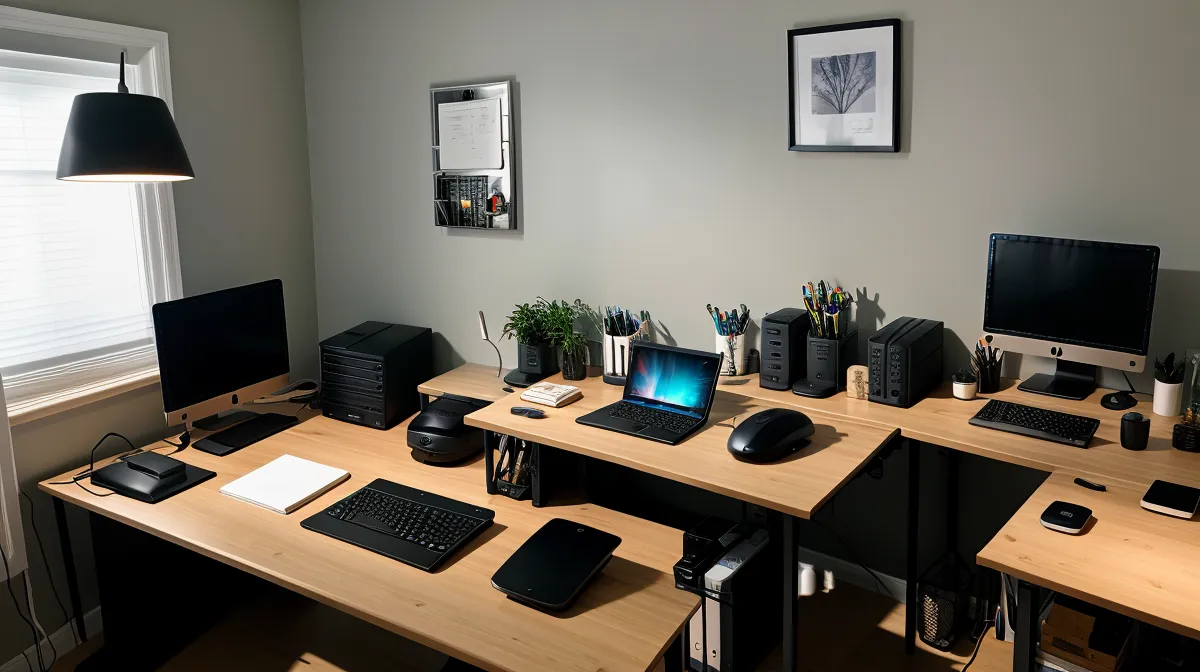
A pair of blue light glasses changes what hits your eyes. An eye supplement is supposed to change how your eyes recover once the screen goes dark. I spent a long stretch treating digital eye strain and plain screen fatigue as the same problem with one shared fix, and that mix-up cost me more rough afternoons — squinting at nested loops across three monitors — than I like admitting.
Quick disclosure before any of that: this site runs on affiliate links, so if you buy through one of mine I earn a small commission at no extra cost to you — which, given that I make my living staring at screens, is a little like a chain smoker reviewing cough drops. I only write about supplements I've actually put through my own routine and logged against real screen hours. None of this replaces an eye exam; if something changes suddenly, call your optometrist, not a blog.
Eye Strain and Dry Eye Aren't Solving the Same Problem
My optometrist's term for what I had was asthenopia — the clinical label for garden-variety digital eye strain. What took me longer to sort out is that screen fatigue and dry eye look almost identical from the inside but respond to completely different fixes. One is about how long your focus holds up across a shift. The other is about whether the surface of your eye stays comfortable while you're staring at something for ten hours. I used to lump both into "my eyes are tired" and wonder why nothing helped consistently, the same way I used to lump a slow query and a memory leak into "the app is sluggish" before I learned to actually profile which one was happening.
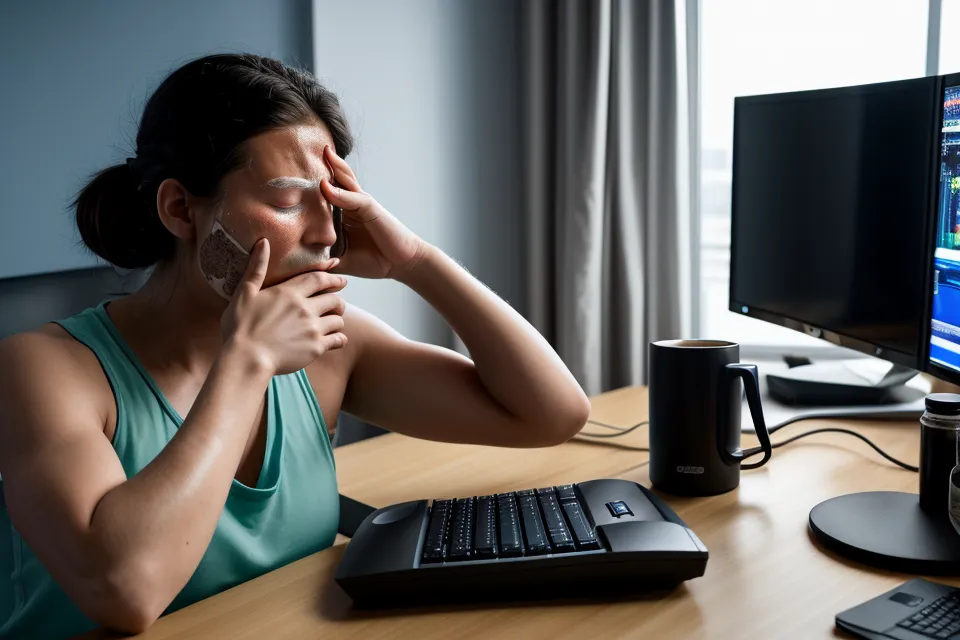
Most write-ups treat it like a mild inconvenience that a splash of cold water cures. My own log read more like a slow system failure with a handful of distinct symptoms. The brow-line lock is the one I notice first — a tight, band-like pressure over the eyebrows, the same kind of early tell as my laptop fan stepping up into a sharper whine the second a long build job kicks off: a clear sign the load just jumped, before anything else shows it. Then there's the midday sandpaper effect, a gritty surface irritation that makes an ordinary blink feel like dragging dry paper across glass; people blink noticeably less when they're locked onto a screen than when they're not, which tracks with how raw that gets. There's also focal latency — looking up from code toward a window and needing a few real seconds before anything past the glass snaps into focus. And there's transient blur, where text lines start swimming or doubling late in the day, which makes you squint without noticing, and that squint drags your neck and shoulders into the problem too.
If you want the play-by-play behind that log, I broke it down in Beyond the Blue Light: What My 14-Month Eye Supplement Log Taught Me About Triple-Monitor Fatigue.
Why the 20-20-20 Rule and Blue Light Lenses Didn't Hold Up
Every ergonomic checklist gives you the same advice: follow the 20-20-20 rule, look at something 20 feet away for 20 seconds every 20 minutes. It sounds clean on paper. In practice, interrupting a deep flow state every third of an hour to stare blankly at a wall is like injecting random sleep commands into an optimized script — it breaks your train of thought, and within a couple of days you quietly stop doing it.
Blue light lenses were next, and I wore a pair of amber-tinted ones for months. They took the harsh edge off a stark white IDE background, but did nothing for the dry heat and underlying focal fatigue. Glare and fatigue turned out to be two separate bugs, not one bug with two symptoms.
What actually helped with glare was rearranging my own setup rather than my face: three monitors curved into a shallow arc instead of sitting in a flat line, a warm bias-light strip tucked behind the center screen to soften the contrast between the glow and the room, and the roller shade over my east-facing window pulled half down by midday so direct sun stops bouncing off the glass. None of that touched the muscular fatigue, but it took a whole layer of irritation off the table before I ever opened a supplement bottle.
Gummies turned out to be the other dead end. I ran a bottle of Nature Made Eye Health gummies every morning for about two months on the theory that something was better than nothing. My afternoon brow tension didn't budge the entire time — no better, no worse, just an expensive habit that taught me a generic "eye health" label on the front of a bottle tells you almost nothing about what a formula is actually trying to fix.
Standard advice also assumes a slow, passive gaze — glance at a screen, look away occasionally, repeat. Intense screen work doesn't match that pattern, whether you're parsing a fast-moving game feed or scanning diffs across three monitors; the demand is sustained and high-frequency, and generic rest-and-blink advice was never built for that kind of load.
When external fixes ran out of road, I started treating the problem from the inside instead.
The 14-Month Eye Supplement Rabbit Hole
Just to be upfront about qualifications: I'm not a doctor or an optometrist, I have zero medical credentials, and if your vision changes suddenly you should see a licensed professional instead of reading a developer's blog. What I am is someone who tracks everything in spreadsheets and got tired of ending workdays in physical discomfort. Between late autumn 2025 and early autumn this year I cycled through seven different eye supplements, logging daily fatigue impressions, capsule timing, and how quickly — or not — each one seemed to settle in.
Early on I leaned into standalone, high-dose lutein and zeaxanthin formulas, the kind of ratio math that's its own separate rabbit hole I won't get into here. They took a little edge off evening glare but left the midday screen burn and gritty eyelid friction almost untouched, and juggling four separate bottles of carotenoids and an ordinary multivitamin got expensive and tedious fast for diminishing returns. I also tried iGenics, built around 12 vision-supporting ingredients, but it took noticeably longer to show anything I could point to in my log. TheyaVue, a 24-ingredient formula that undercuts both on cost, was a fine entry point but had a thinner track record for me to cross-check against. My friend Griffin, a backend developer who won't accept a health claim without a citation, still gives me grief every time I bring up a new bottle, and honestly, his skepticism is a decent filter even when it's annoying to sit through.
I documented that whole stretch in The Austin Coder's Guide to Screen Fatigue: My 14-Month Eye Supplement Experiment.
Building a Stack Around VisiFlora
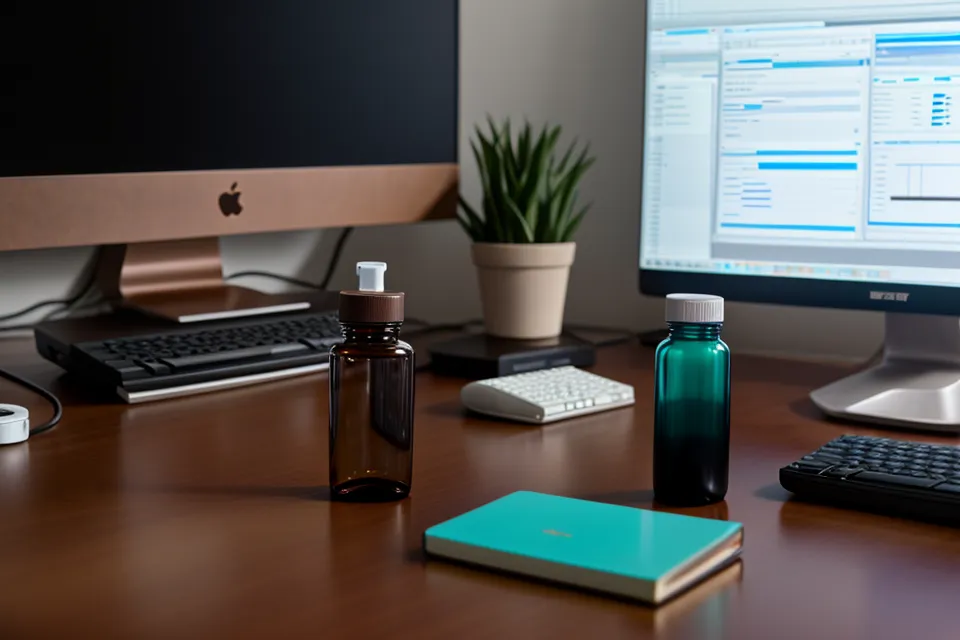
The real shift came when I moved away from mega-dose carotenoids and started looking at formulas aimed at systemic balance instead of raw pigment. That led me to VisiFlora, which takes a different angle: instead of just dumping more pigment into the system, it targets the connection between gut balance and ocular moisture.
One capsule with breakfast, following the dosage on the bottle: that's the whole routine, which is most of the appeal after years of juggling four separate bottles every single morning.
Don't expect anything dramatic in the first couple of weeks. Judge a formula like this across a full cycle rather than a free sample, and treat any day-three excitement — good or bad — as noise either way.
What showed up over time was a smoother eyelid glide during afternoon client deployments, with less of that sand-in-the-corners feeling, along with steadier focal stamina later into the afternoon instead of the usual clenching over the brow, and one capsule replacing what used to be a cluttered multi-bottle routine.
It isn't a magic fix, and it comes with real trade-offs — it costs more than a basic drugstore eye pill, and it's sold only through the official site rather than retail shelves. The manufacturer does back it with a 60-day money-back guarantee, which took most of the risk out of testing it properly. Pricing and package options shift occasionally, so check the official page directly for the current figures.
After working through all seven supplements across that stretch, VisiFlora is still the only bottle that's earned a permanent spot on my desk.
Signs That Aren't Actually Eye Strain
Not every symptom that shows up during a long screen day is actually eye strain, and mixing them up wastes time and money. A twitch in your eyelid is a different signal than fatigue — mine tends to show up on weeks I'm under-slept and over-caffeinated, not necessarily weeks with heavy screen time, so I stopped assuming every twitch meant I needed another capsule. Floaters are their own category too, worth a dedicated look rather than something you try to fix by reshuffling your supplement stack after a rough screen week. The fog you get after a long debugging session is also distinct from blurry near-focus — one is mental bandwidth running low, the other is your focusing muscles genuinely tired, and I've learned to tell them apart by whether stepping away from the monitor actually clears it. If you're reaching for eye drops multiple times a day just to get through a shift, that pattern is worth noticing on its own rather than treating as background noise. Night driving is a separate issue entirely, one I keep firmly outside this stack's job description. And none of this replaces what's on your plate — a supplement layer sits on top of food, it doesn't stand in for it.
A designer I know from a co-working space, Joaquin, logs similar hours to mine on color-critical work, but his afternoon crashes track his monitor's white point almost exactly — nudge it a little warm or cool and his whole afternoon shifts, where mine barely moves. Same symptom, different bottleneck, which is exactly why I'm skeptical of one-size-fits-all supplement advice. I started pulling rough numbers from a screen-time tracker just to check whether my worst fatigue days actually lined up with hours logged or with something else — usually it was something else, a late night or a stretch of back-to-back calls. On cost: a stack like this isn't cheap next to a drugstore bottle, so I only keep paying for one if the afternoon fatigue curve actually flattens out, not just the morning.
Can an eye supplement replace blue light glasses or monitor breaks?
No supplement replaces basic physical reality. If you keep your display brightness cranked to maximum in a pitch-black room and refuse to blink for four hours straight, your eyes will hurt regardless of what you swallow. In my experience, a targeted supplement like VisiFlora works more like internal hardware maintenance — supporting lubrication and visual endurance so environmental stressors don't derail you as fast. Think of it as thermal paste for your CPU: it improves heat dissipation, but you still need an actual cooling fan.
How long does it take to notice a difference in daily screen fatigue?
There's no clean universal number here, and I'd be suspicious of anyone who hands you one down to the day. Budget at least a full month before drawing any conclusion, longer if you want real confidence, and treat early excitement as noise either way. Anything promising visible results within 48 hours is selling marketing, not biology.
How should a developer track whether an eye supplement is actually working?
Keep it boring and consistent. A couple of numbers logged at the end of each workday — brow tension, eyelid dryness, roughly when blur starts creeping in — with your monitor brightness, desk lighting, and prescription held steady so you're not accidentally testing five variables at once. Consistency in the logging matters more than precision in any single entry.
Are there any side effects from taking targeted eye supplements?
I didn't run into adverse digestive or systemic effects during my own testing, but biology varies person to person. Always read the label ingredients to check for known allergens, stick to the manufacturer's suggested serving size, and talk with your eye care professional or general doctor before adding any supplement to your routine.