
I'm mid-scroll through a git diff, hunting a stray semicolon, when I glance up at the blank wall behind my monitor out of habit, and there's nothing there. No smear of ghost text, no afterimage hanging where the code used to be. For most of the past few years that half-second of visual catch-up was automatic, the tax I paid every time I looked away from a wall of code. It's gone now, and that absence is basically the whole pitch for astaxanthin benefits as far as digital eye strain goes. Programmer health questions rarely have a clean before-and-after, but this one does, and it's the question I get asked most after any post that mentions supplement testing.
Most of what follows is organized around the questions other developers actually send me, because a straight diary of milligrams and mood stopped being useful once I had more than one supplement in rotation, and optimizing how I stare at glowing rectangles for a living is its own small monument to screen addiction. So here's the short version, question by question.
Does Astaxanthin Actually Do Anything for Digital Eye Strain?
Short answer: yes, for the specific complaint I had, though not overnight. The clearest evidence isn't mine, though. It comes from randomized trials on VDT workers — visual-display-terminal, which is a fancy way of saying people like us — where six milligrams of astaxanthin a day for four weeks measurably improved something called accommodative amplitude compared to placebo. That's the eye's ability to keep re-focusing as you shift from a code editor to a chat window to the coffee mug six inches from your face. The proposed reason is a drop in oxidative stress inside the ciliary muscle, the muscle that does the actual refocusing work every time your eyes change targets. I didn't run a controlled trial in my spare bedroom, obviously, but that mechanism lines up with what I logged.
A developer friend, Soren Tabata — someone I've never met in person, we ended up in the same Slack for independent contractors — is the reason I found that trial at all. Soren has a habit of digging through PubMed unprompted and dropping a PDF on me at odd hours with zero context, just a link and maybe three words. That one happened to land the same week my focus kept sliding off the third monitor, so I paid attention.
Dose, Timing, and the Fat-Solubility Catch
Astaxanthin is fat-soluble, which sounds like a footnote until you realize it decides whether the capsule does anything at all. Swallow it with black coffee on an empty stomach and a meaningful chunk of it just passes through undigested; nothing around to carry it across the gut wall. I tested the standard four-to-twelve milligram range and landed on twelve, taken alongside actual fat in the same meal, not before or after it.
A reader, Priska Mwenda, is who actually pushed me to think about this properly. She emailed after reading something I wrote about gut absorption, and her question wasn't about the milligram number at all; it was about timing relative to meals, which hadn't occurred to me as the more important variable. That's a separate rabbit hole about supplement absorption and bioavailability that I've gone into elsewhere, so I won't repeat the whole thing here.
If you want to see where astaxanthin ranks against the other supplements I've tested, I put together a full ranking of eye supplements that cut through the fog, and it's not the top of that list on cost — more of a mid-pack monthly spend — but it earned its spot.
What About Cutting Screen Time Instead?
Before any of this, I tried the obvious fix: cap the workday at eight hours on weekdays and just stop opening the laptop after that. It sounded like the responsible move, and for about two weeks it felt like progress. Then the same afternoon ache showed up again, just later in the day, because eight dense, close-focus hours does roughly the same damage as ten if the intensity never changes. Cutting the number down treated the symptom's schedule, not the cause. There's a longer post on that specific experiment if you want the full log of what did and didn't shift.
Stacking Astaxanthin With Blue Light Glasses and Lutein
None of this replaces getting your monitor distance and height right first — that's its own baseline topic and worth sorting out before you spend money on capsules. Blue light glasses and astaxanthin aren't solving the same problem, either. Glasses filter light coming in from outside. Whatever astaxanthin is doing happens after the light has already hit your eye — a distinction I get into more in a dedicated comparison. Lutein and zeaxanthin are usually the first carotenoids people reach for, and the ratio question between those two and astaxanthin deserves its own full write-up rather than a paragraph tacked onto this one.

How Do You Know If It's Actually Working?
Tracking is the only honest answer I've got. I log a rough daily strain impression the way I'd log a bug severity — not scientific, just consistent — and that spreadsheet habit is a bigger topic than fits here. Supplement cycling is part of the same log: whether you should run something for a stretch and then stop, which I answer in more detail when I walk through the full rotation of seven supplements I tried over more than a year. It's also worth separating a dry, irritated feeling from general fatigue, since they're not the same failure mode and don't respond to the same fixes, and the 20-20-20 rule is a decent starting habit but wasn't enough by itself once I was doing sustained close-up work for most of a day.
My own optometrist stays openly skeptical of supplement claims in general, which I think is the correct default position, and I've written separately about sitting across from that kind of skepticism without getting defensive about a routine that's working for me personally. If you want the full glossary of what's actually inside these capsules beyond astaxanthin itself, I keep a running ingredient reference elsewhere too.
What I'd Tell Someone Just Starting Out
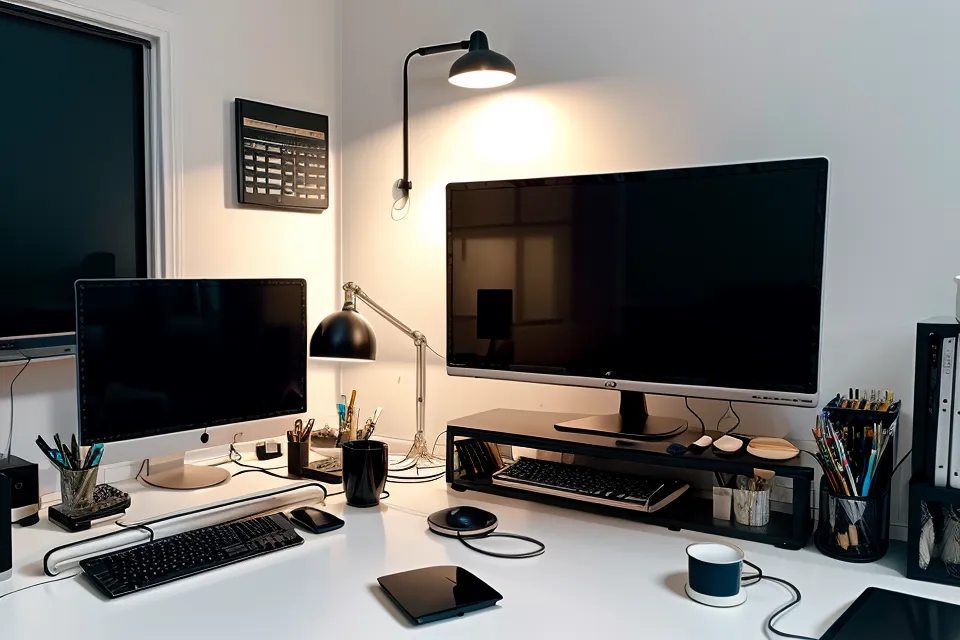
Stepping away from the monitors still matters more than any capsule. Some evenings I walk over to the kite meadow at Zilker Park just to let my eyes focus on something past arm's length for a while, and that reset does something no supplement replicates. The standing desk in my setup — three monitors, in the same converted bedroom I've worked from for years — has a motor that groans and catches a little when it lifts after a few hours sitting, like it's fighting to shake off the same stiffness my eyes have by then. Astaxanthin didn't fix ergonomics, ambient lighting, or the fact that I still forget to blink during a tricky merge conflict. What it did was shorten the gap between looking away from a screen and actually seeing clearly again, and for someone whose whole job depends on that gap, that's not nothing.
I'm not a doctor, an optometrist, or anyone qualified to tell you what your eyes specifically need — just someone who tracks this obsessively because the alternative was quitting a career I like. If you're dealing with the same afternoon fog, talk to an eye care professional before you build a supplement stack, and treat everything above as one programmer's logs, not a protocol. For more on what did and didn't work, I compared preservative-free eye drops against supplements to figure out which one was actually solving the root problem instead of masking it.