Cursor blinking on line 340 of a pull request, and the text along the far edge of my second monitor has stopped holding its edges — not blurry exactly, more like it's lost its grip on the pixel grid. I nudge back from the desk, blink hard twice, keep scrolling anyway. Three years into remote development work, this is just what digital eye strain looks like on an ordinary afternoon: not a dramatic collapse, more a system quietly running past its rated hours, monitor after monitor, hour after hour.
Quick disclosure up front: some of the links below are affiliate links tied to eye supplements I mention, and if you buy through them I earn a commission at no extra cost to you. Everything here comes out of an actual developer-health routine that's been running and getting logged for more than a year, VisiFlora included, not a sponsored list assembled after the fact.
What Digital Eye Strain Actually Feels Like After 8 Hours
My optometrist has a name for what happens after eight-plus hours across three monitors: asthenopia, the clinical term for digital eye strain. In practice it shows up as a dull pressure behind one eyebrow by mid-afternoon, edges that go soft on small text, and a general sense that some background process never gets garbage collected.
Dry eye is a different animal, and it stays a separate line on the tracking sheet — more about grittiness and stinging on the surface, where fatigue reads more like a dull ache building behind the socket over the course of a workday.
From what's shown up on the tracking sheet, digital eye strain has never been one problem with a single fix. It's an accumulation — screen hours, lighting, blink rate, sleep, hydration, and whatever did or didn't get taken that morning — and treating it like a single bug with a single patch is how the first stretch of this whole project got wasted.

Why I Track Fatigue Like a Bug Tracker
Every day gets logged — a fatigue score from 1 to 10, next to what got taken that morning, how many hours of sleep happened, and total screen time. There's more on the actual mechanics of that spreadsheet in Managing Late Afternoon Eye Fatigue After Years of Remote Work, so no need to rebuild it here, but the short version of the method matters more than the tool: change one variable at a time, hold it steady for a real stretch, and don't trust a single good day — a day where two things changed at once tells you nothing, it's noise, not signal.
The first thing that tracking exposed was how little a generic multivitamin off a CVS shelf, one with "eye support" printed on the label, actually did. It was the obvious first move — cheap, close by, easy to grab — and it barely moved a single number on the sheet, which is exactly the kind of result you only catch when you're logging instead of guessing how you feel.
Over more than a year, seven different supplements got tested against that same sheet. The full ranked list, including the ones that didn't make the cut at all, lives in Screen-Heavy Austin Life: Ranking the Eye Supplements That Actually Cut Through the Fog After Years of Coding — this piece is really about the two that did, and how the rest of the routine got built around them.
Where Blue Light Glasses Stop Being Enough
Blue light was the first theory, mostly because it's the easiest one to sell yourself on. A decent pair of blue light-filtering glasses got bought, dark mode went on everywhere, and the office lighting got dimmed until the room looked like a submarine at night.
For a while it seemed to be working. Then the mid-afternoon headache came back on schedule anyway, glasses and all, which was the point where that particular experiment had to be called a failure — the glare was gone, but the pressure behind the eyebrow didn't care.
That's roughly why blue-light mitigation reads as a real piece of this and also a small one: it changes what's hitting your eyes, not what your eyes are doing for eight straight hours regardless of the light source. Glasses alone were worth maybe a point off the fatigue score, if that.
Building an Eye-Rest Routine That Survives a Deploy
My optometrist's first suggestion was the 20-20-20 rule — every twenty minutes, look at something twenty feet away for twenty seconds. It's a fine rule on paper, and it's more or less the foundation the eye-rest advice on this site builds from, but nobody actually pauses mid-deploy to hunt for something twenty feet away.
Especially not when the fan on the laptop has just climbed a half-step in pitch because a long build kicked off, and curiosity wins over discipline every single time.
What actually works is a coarser version of the rule: a hard stop once an hour to stand up and look at something far off, plus a real break in the middle of the day — quiet, no screen, usually fifteen or twenty minutes. That usually means walking down to the Barton Creek Greenbelt trailhead near the house and just being somewhere that isn't lit by a panel for a while. It's not about the exercise so much as giving the focal muscles something other than a fixed distance to lock onto.
The Desk and Lighting Half of the Equation
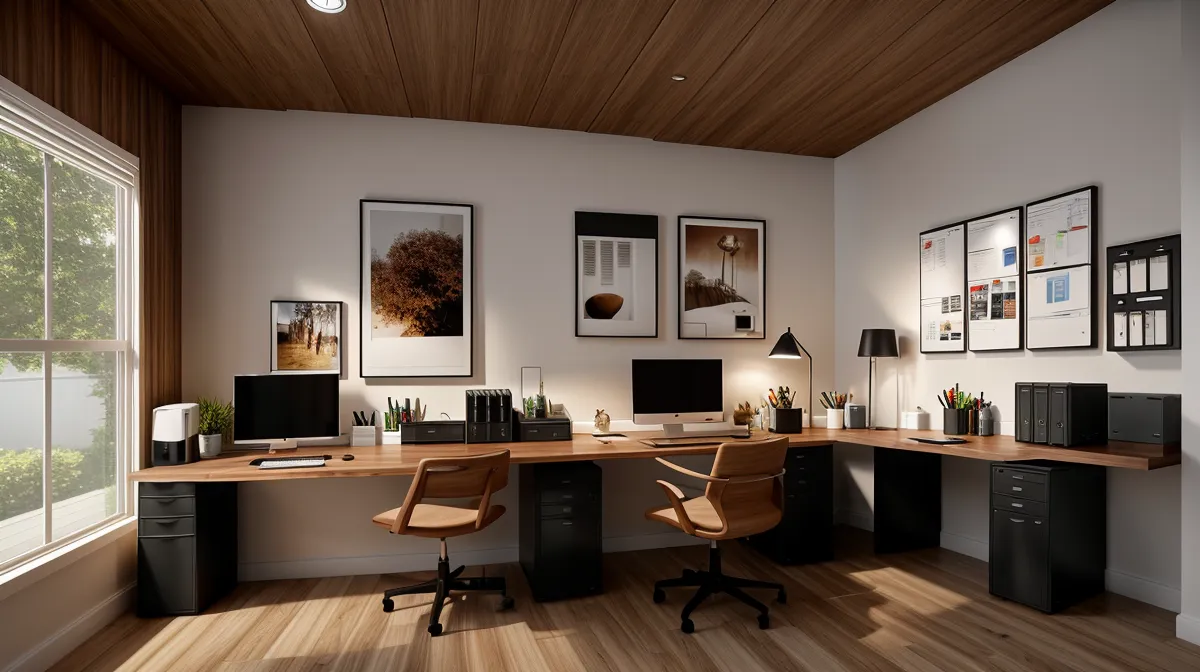
None of this works if the environment is fighting you the whole time. My desk wraps around two walls of what used to be a spare bedroom, three monitors fanned out in a shallow arc to avoid twisting my neck all day, and a warm light strip tucked behind the center screen that keeps the contrast between the panel and the wall from making my pupils hunt all afternoon.
The roller shade on the east-facing window comes down about halfway by the time I break for lunch — otherwise the glare off that screen turns unbearable fast. None of that is a supplement fix. It's baseline ergonomics, and I'd put it ahead of any capsule on this list.
Joaquin, a graphic designer I know from a co-working space here in East Austin, spends even more hours a day on color-critical screen work than I do, and he's far more sensitive to this piece than I am — one wrong white-point setting on his monitor and his whole afternoon is shot, supplements or not.
There's a certain irony in building interfaces meant to keep people staring at screens for a living while also nursing my own screen-fried eyes, and I've mostly made peace with being both the problem and the guy writing tracking spreadsheets about it.
The Supplement Stack: What's In It and Why
The stack running now centers on VisiFlora, which takes a different angle than most of what's on a pharmacy shelf — instead of just loading up on the usual vision-support vitamins, it leans on the idea that your gut and your eyes aren't as separate as they sound.
I was skeptical the first time that pitch showed up; it has the ring of something a marketing team invented. But the underlying logic isn't crazy — if what you eat isn't being absorbed well, your eyes, among the more resource-hungry tissue in your body, are some of the first places that shows up. There's a deeper dive into that specific absorption angle in another post, so no need to rebuild the whole argument here.
VisiFlora runs around seventy bucks a bottle, which felt steep next to a CVS multivitamin, but a single capsule a day is easy to keep track of, and there was a stretch early on burning through low three figures a month on fixes that did nothing at all — this at least moved the number on the sheet.
I don't get into ingredient-by-ingredient breakdowns in every post — there's a dedicated reference piece for the full list, including how lutein and zeaxanthin ratios factor into a formula like this, which is its own rabbit hole. For anyone layering antioxidants on top of a base formula, Best Astaxanthin Benefits for Programmers Dealing With Screen Fatigue covers that separately.
The Runner-Up I Almost Stuck With: iGenics
Before landing on that combination, a real stretch went into testing iGenics, which takes the more traditional route — a twelve-ingredient vision-support blend without the gut angle.
It's a legitimate product. The capsules are just bigger than ideal, and the ramp-up period felt longer — real movement on the fatigue score took longer to show up than it did with VisiFlora, for this specific pattern.
Anyone who'd rather skip the gut-eye theory and stick with something closer to a standard formula from a well-known name should look at iGenics instead — it runs around seventy bucks a bottle too, so the choice comes down to which theory you trust more, not which one costs less.
Mistakes That Set Me Back
A few things went wrong along the way, and each one taught something the wins didn't.
The first mistake was assuming more of a good ingredient meant a better result: adding a separate lutein capsule on top of the regular dose for a stretch, chasing a bigger effect. It backfired into stomach discomfort strong enough that the extra capsule got dropped fast, with no matching movement on the fatigue score — just complaints from a different organ.
A work trip caused the second mistake: packing light meant leaving the supplements behind on the kitchen counter at home, and the fatigue score climbed most of the way back toward baseline before that got noticed — which said more about how fast the benefit fades than any deliberate test could have.
The third mistake was procedural, not physical: switching from testing iGenics into testing VisiFlora without leaving a real gap between them meant an early stretch of what got logged as "VisiFlora data" was probably still muddied by whatever iGenics was still doing in the system. Cycling supplements properly — a clean stop on one before a clean start on another — turned out to be its own discipline, and skipping it cost real signal in the spreadsheet.
Is This Actually Working, or Just Placebo?
Griffin, a backend developer here in Austin known since a JavaScript meetup years back, asks this every time it comes up, and doesn't let it go easily — he wants peer-reviewed sources before accepting any health claim, and eye supplements as a category don't have a deep well of those to point to.
There's no clean answer beyond what's actually on the spreadsheet: a fatigue score that dropped when VisiFlora got added and has held there since, controlled about as well as a one-person, non-blinded experiment can be controlled, which is to say not very well by any real scientific standard.
That's exactly the gap where a healthy layer of skepticism belongs before anyone spends real money on this category, and naming that gap honestly matters more than pretending a personal tracking sheet is a clinical trial. The pattern has stayed consistent across enough days to not feel like pure placebo — though admittedly, that's exactly what placebo feels like from the inside, and Griffin brings that up more than is comfortable.
These days, seven hours into a stretch of reviewing pull requests on the second monitor, the text at the edges still holds — no doubling, no fuzz creeping in from the corners. That's the actual marker worth chasing here, more than any single number on a spreadsheet.
How to Build Your Own Version of This
Anyone hitting this same wall — code starting to blur, another pair of blue light glasses looking tempting — should work the environment first, because it's free. Get some kind of bias lighting behind the monitor, build in a real away-from-screen break instead of a glance out the window, and pay attention to water intake specifically; coffee had replaced almost all the water for a long stretch, and dehydration alone was cranking up the strain more than expected once it actually got tracked.
Once the environment is handled, the choice is between a gut-angle formula and a traditional one. VisiFlora is the one running daily now, where the numbers have been most consistent, and iGenics is the one worth a look for a more conventional ingredient list at a similar price point.
Don't skip the actual optometrist visit either. Get a real diagnosis before guessing at a supplement stack — "digital eye strain" covers a lot of different underlying patterns, and any given case might not match this one at all.
Curious About the Supplement Still in My Daily Stack?
Of everything logged on that tracking sheet over the past year, VisiFlora is the one that never got dropped. Worth a look if deciding where to start.
Check VisiFlora Pricing on the Official WebsiteI am not a doctor, optometrist, or medical professional. The experiences shared here are my personal observations as a web developer. Always consult with a licensed healthcare provider before starting any new supplement regimen.