One developer swears a dark IDE theme saved his eyes, while the next one blames dark mode for the exact same afternoon headache. Ask around any remote work forum full of web development folks and you'll hear both answers argued with total confidence. I've spent enough time testing eye supplements and tracking digital eye strain against a rotating lutein-zeaxanthin ratio to know the honest answer isn't a flat yes or no on dark mode at all.
The myth going around is that your color theme is the root cause: pick the wrong one and your eyes pay for it, pick the right one and you're safe. That's backwards. Dark mode works better as an ergonomic lever than as a fix, and it's definitely not the villain half the internet makes it out to be. What actually matters is the system around it: your refresh rate, your own contrast sensitivity, and whether your eyes have what they need to handle a high-contrast screen for a full workday.
The Myth About Digital Eye Strain and Dark Mode
Digital eye strain gets treated like a single problem with a single switch to flip, and I get why — it's a tidy story. My own case looks messier once you break it down. Some days the ache traces straight back to hours logged in front of a screen; other days it's got nothing to do with hours at all, and blaming the clock just hides what's actually going on.
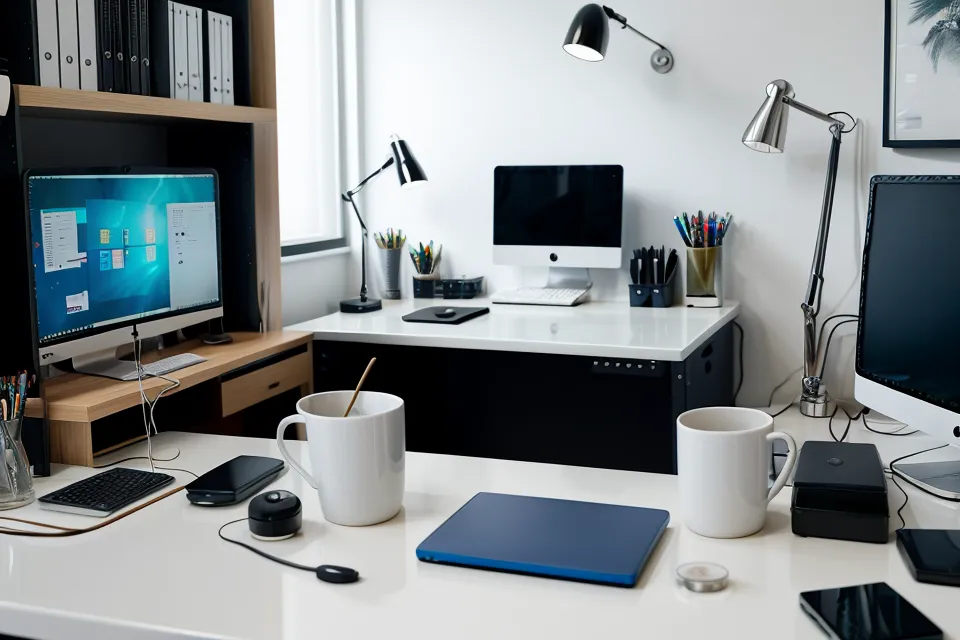
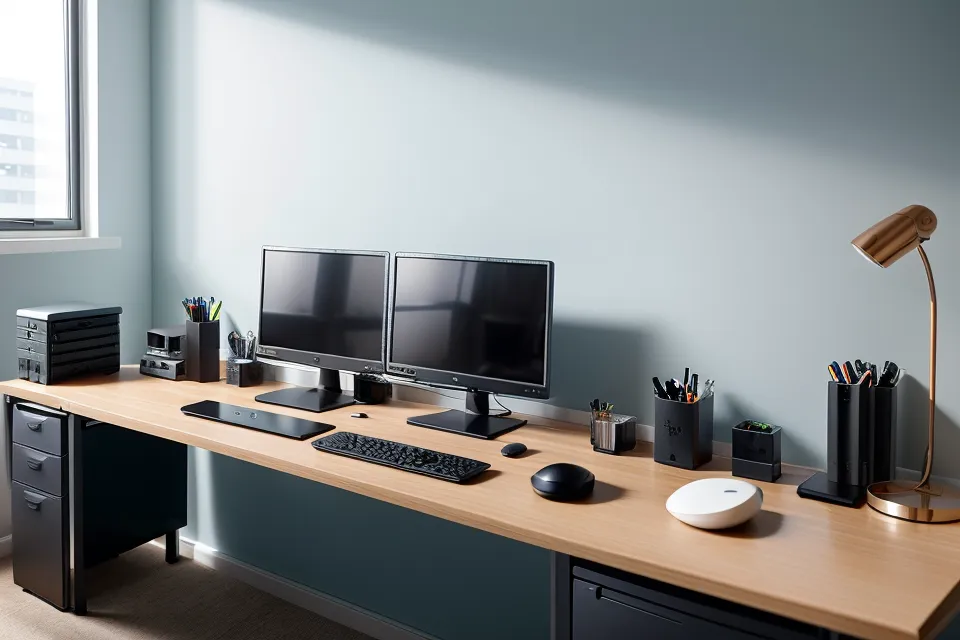
My setup isn't subtle about the problem, either — a U-shaped desk wraps two walls of what used to be a spare bedroom, three monitors curve into a shallow arc in front of me, and a strip of warm amber light sits behind the center screen to soften the black background once it gets dark out. Blackout shades keep the sun off the glass by the time lunch rolls around. My friend Griffin, a backend developer who somehow always owns the next piece of gear before I've even heard its name, was running a 144Hz monitor months before I upgraded mine, and he's the one who first told me refresh rate probably mattered more than theme color — which I took seriously immediately, because apparently three screens wasn't already enough of a commitment to staring at glowing rectangles for a living.
Is Your Contrast Setup Actually the Problem?
For some of us, dark mode isn't neutral. If your vision has any degree of astigmatism, the high contrast between a black background and light text can trigger something close to halation — a soft blur that creeps in around the edges of the text, especially late in the day. That doesn't mean dark mode is broken for you specifically. It means your setup needs a second look before you write off the whole theme.
Refresh rate turned out to matter more than I expected going in. Bumping my primary monitors up reduced the flicker my eyes were quietly fighting all day, and long log files stopped feeling like they vibrated when I scrolled through them. That single change did more for my afternoon fatigue than any amount of fiddling with color temperature software ever managed.
What My Eyes Actually Needed Wasn't Another Filter
Blue light glasses were the first thing I tried, and they're a reasonable place to start — filtering part of the spectrum before it reaches your eyes is a legitimate external fix. But there's also an internal filter sitting in the eye itself, built around the macula of retina, that's supposed to buffer some of that light before it reaches the part of your eye doing the actual seeing. Whether that internal filter is well stocked seems to matter as much as anything you do to the screen.
I tried supporting that internal side early on with a bottle of Nature Made Eye Health gummies, taken daily for two months. My strain log barely budged. Chewy multivitamins with a scattershot ingredient list aren't the same as something dosed for a specific carotenoid ratio, and that gap is easy to miss when you're just grabbing whatever's on the shelf without checking the label.
Does Supplement Timing or Type Matter More?
Dry eyes and general eye fatigue get lumped together constantly, and they're not the same complaint — I log them separately now instead of dumping everything into one vague "my eyes hurt" entry. Timing seems to matter too: taking supplements alongside breakfast, with something that has a bit of fat in it, tracks with better afternoon numbers than taking them on an empty stomach, though I won't pretend I've isolated that variable perfectly. Joaquin, a graphic designer I know from a co-working space who logs even more screen hours than I do, started ordering every supplement I mentioned before I'd even finished testing it myself, which is a good way to end up with a cabinet full of half-used bottles and no idea which one actually helped.
The Number That Finally Moved
The moment that told me something had actually shifted wasn't a line in my own spreadsheet. It was my optometrist stopping halfway through reading my chart, comparing the numbers against the ones on file from the year before, and asking what I'd changed. That's a harder thing to argue with than my own tracking, since I'm not exactly an unbiased observer of my own project. I still take the 20-20-20 rule seriously as a baseline habit — it just isn't sufficient by itself for anyone spending a full workday under a dark theme.
The Rule I'd Actually Recommend
So here's the actual rule, instead of the theme debate: before you blame or credit dark mode for how your eyes feel by the afternoon, check your refresh rate first, then check whether your contrast setup matches your own eyes rather than some default preset, and only after that look at whether you're supporting your eyes' own filtering system instead of just blocking light from the outside. Switching back to light mode without checking any of that first is a coin flip. I laid out the fuller supplement-by-supplement breakdown separately in Screen-Heavy Austin Life: Ranking the Eye Supplements That Actually Cut Through the Fog After Years of Coding, if you want the specifics.
None of this required giving up the dark theme I actually like working in. It required treating my eyes as part of the system I maintain, not a fixed piece of hardware I complain about and otherwise ignore.